Bruges to
Nice
“Six countries, three weeks, one campervan — and a drive through the heart of Europe to the French Riviera.”
Bruges to Nice and back
“We left in November — cold, grey, northern November — and drove until we could smell the Mediterranean.”
This was Inigo’s most ambitious route yet. From Frodsham we crossed the Channel at night and pointed south through Belgium, Germany, Luxembourg, Switzerland and France. The plan was simple: reach Nice on the Riviera before winter fully closed in. What happened along the way was anything but simple.
Bruges in the morning mist. Roman ruins in Trier. A day trip by train into Luxembourg City. Two days in the Black Forest watching waterfalls. An unplanned stop in Solothurn, Switzerland — a perfectly preserved baroque town almost no one outside Switzerland knows about. Then Annecy, its alpine lake cold and impossibly blue. Then the Route Napoléon — one of Europe’s great drives — south through the Alps to Nice.
And at the end of it: Monaco. Tiny, absurd, glamorous Monaco. Here’s the full story.
Medieval canals & morning mist
“Bruges in November is what Bruges should always be — cobblestones, canals and almost no one else around.”
We crossed the Channel on the late ferry from Dover and spent the night in Calais, then drove the short hop to Bruges the next morning. The UNESCO-listed medieval city is one of Europe’s best-preserved, and in November — long before the tourist season — it belongs entirely to the locals.
The canal network is extraordinary. The Markt square, the Belfry, the Basilica of the Holy Blood — all stunning and all practically empty. We walked for hours. The Belgian chips with mayonnaise at a waterside café were, objectively, the finest chips in the world.


Rome’s oldest city & a day by train
“Trier was founded by Augustus. You park next to a Roman amphitheatre. That doesn’t get old.”
The drive south from Bruges took us through the Ardennes and into Trier — Germany’s oldest city and one of the most remarkably preserved Roman sites in northern Europe. The Porta Nigra, the Imperial Baths, the amphitheatre, the Basilica of Constantine — all within walking distance of the campsite. We stayed two nights.
Day two was a day trip by train into Luxembourg City — just an hour each way. Luxembourg is small, immaculate and dramatically positioned on a deep gorge. The old town is UNESCO-listed, the Pfaffenthal Panoramic Elevator drops you 30 metres into the lower city, and the view from the Bock Casemates — ancient tunnels carved into the clifftop — is extraordinary. We found a café that did the best beef stew we’d had in years.
Germany’s highest waterfall
“Triberg is deep in the Black Forest — cuckoo clocks in every window, waterfalls around every corner, silence everywhere else.”
After Luxembourg we drove south through the Moselle valley and into Baden-Württemberg, heading for Triberg — a small historic town in the heart of the Black Forest, famous for the highest waterfall in Germany. The campsite was right in the town centre, and we spent two days at walking pace exploring the forests, the falls and the extraordinary cuckoo clock shops.
The Triberg Waterfalls drop 163 metres through seven tiers of mossy rock — spectacular even in November when the mist hangs in the trees. The town itself is a curious mix of traditional Black Forest craftsmanship and cheerful tourism, and it works beautifully. The Schwarzwälder Kirschtorte (Black Forest gateau) was consumed in a quantity that will not be specified here.


Switzerland’s most beautiful town
“We stopped for lunch and stayed for four hours. That’s what Solothurn does to you.”
The drive from Triberg to Annecy took us across the Swiss border and through a town we had never heard of: Solothurn. Known as the most beautiful baroque town in Switzerland, it sits on the Aare river and contains an extraordinary concentration of baroque architecture — the St Ursus Cathedral, eleven churches, eleven fountains, eleven towers. The number eleven appears everywhere in Solothurn, for reasons the locals are delightfully vague about.
We had not planned to stop. We saw the old town from the road, pulled over, and ended up spending an entire afternoon wandering its perfectly preserved streets. An unmissable accidental discovery.
The alpine lake of Annecy
“Annecy sits at the foot of the Alps on the clearest lake in Europe. In November it is almost unbearably beautiful.”
Arriving in France from Switzerland, we drove down to Annecy — a perfectly preserved medieval town on the southern shore of Lac d’Annecy, surrounded by Alpine peaks. The lake is extraordinarily clear, a deep turquoise-green even in cold November light. We parked at the foot of the lake and spent two days.
The old town canal district — the Thiou canal running past the Palais de l’Isle — is one of the most photographed spots in France, and deservedly so. The Saturday market overflowed with Alpine cheese, charcuterie and tartiflette. The mountains behind the town caught the last of the autumn snow. We were reluctant to leave.


The Riviera at last
“The Route Napoléon climbs into the Alps from Grenoble and drops you, three days later, into the warmth of Nice. It is one of Europe’s great drives.”
From Annecy we picked up the Route Napoléon — the historic road that Napoleon took from his Elba exile back to Paris in 1815. It climbs south from Grenoble through the Hautes-Alpes, passing through Crots and Castellane before descending to the Côte d’Azur. Three days of alpine driving through gorges, lavender plateaux and mountain passes, arriving finally at the Mediterranean.
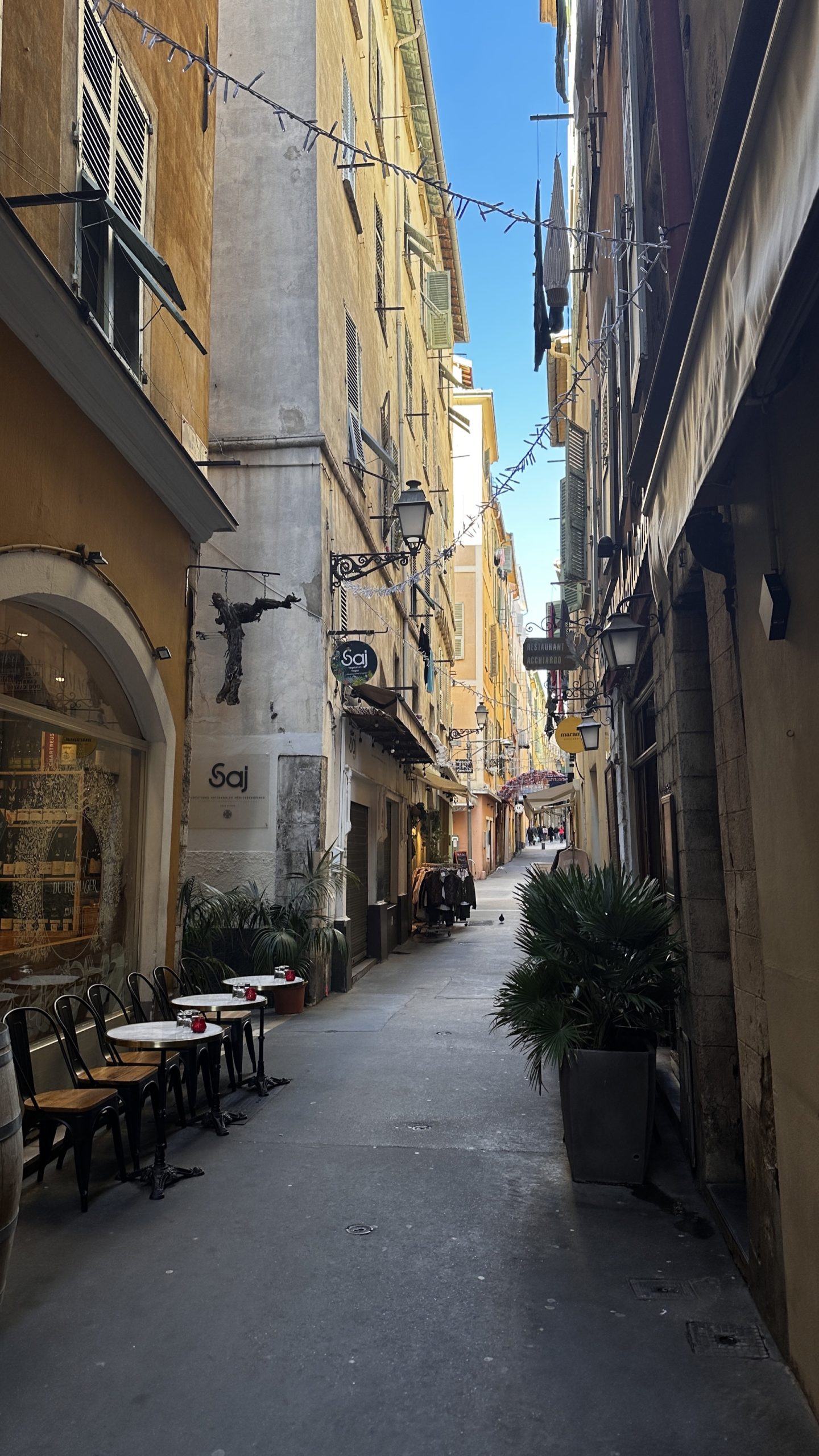
Nice itself needs no introduction. The Promenade des Anglais, the old town, the Cours Saleya flower market, the hilltop Château — all extraordinary. We left the van at Sospel in the hills above Nice (a campsite with a train into the city) and spent several days exploring. The socca flatbread, the pan bagnat sandwiches, the Niçoise salad eaten at the source — this is the food that defines the French Riviera.
The world’s smallest country
“Monaco is two square kilometres of audacious wealth wedged between France and the Mediterranean. It is entirely unlike anywhere else on earth.”
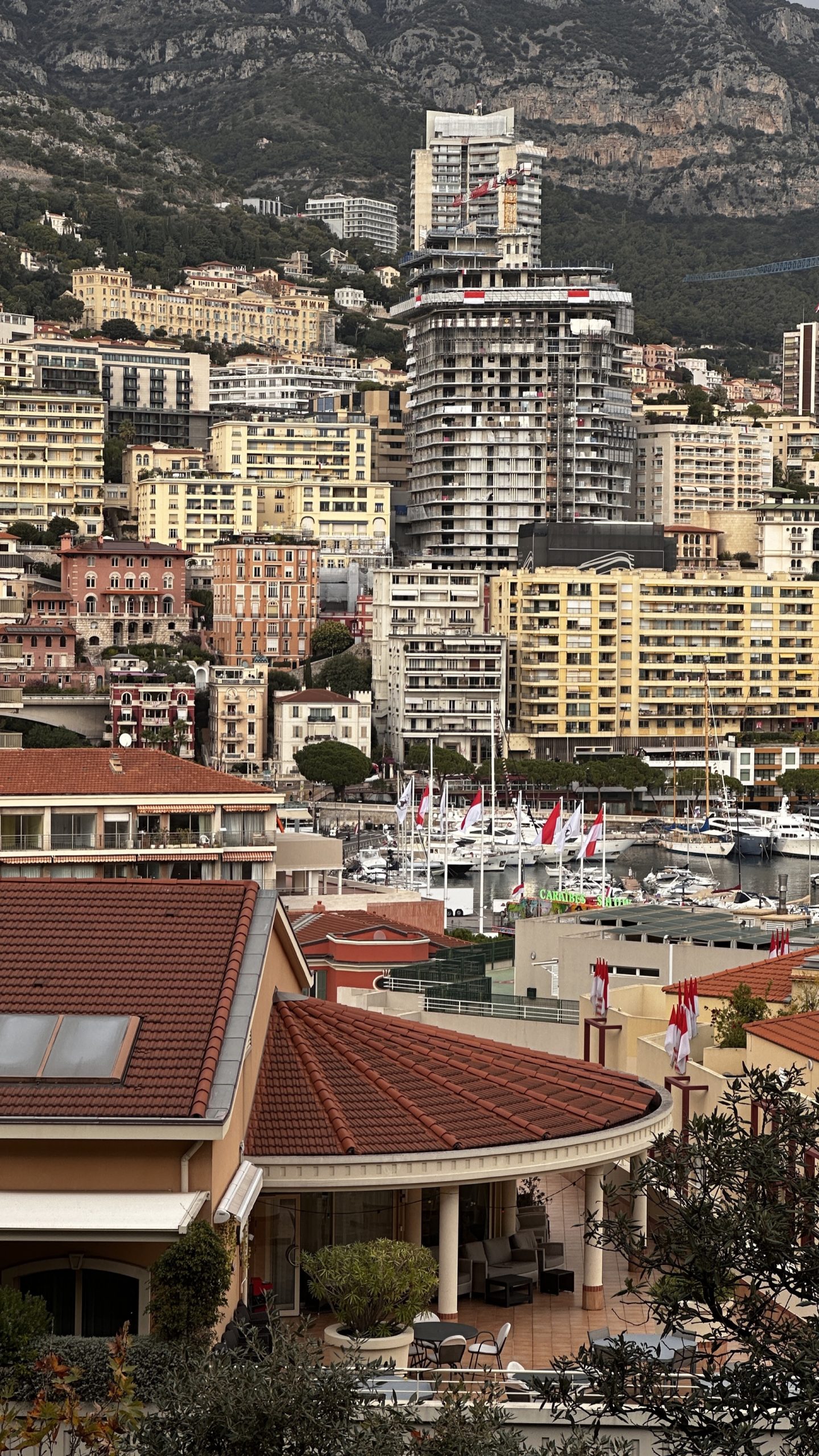
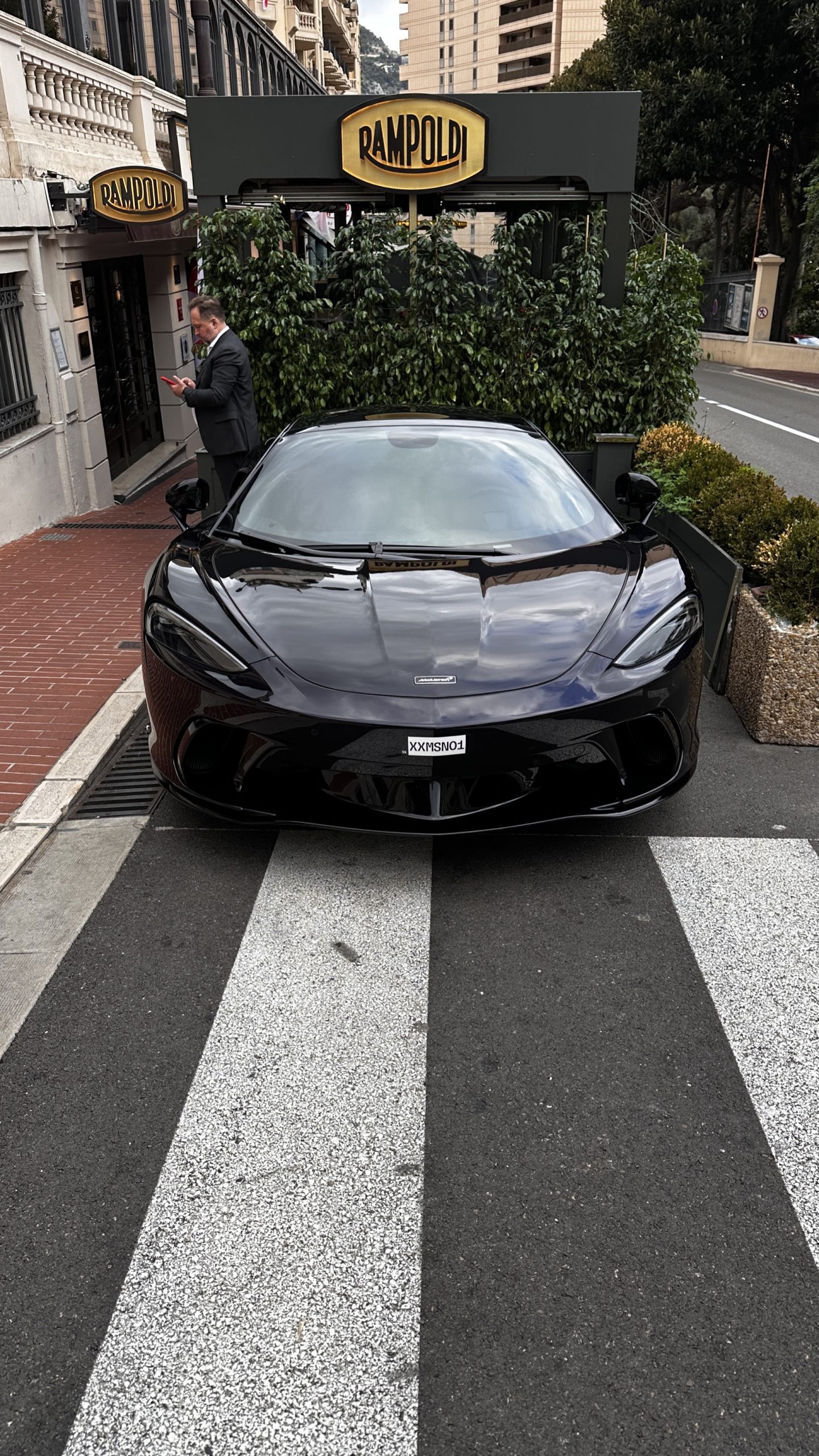
From Sospel we took the coast road into Monaco — arriving in the Principality by campervan felt faintly preposterous and entirely perfect. Monaco is absurdly small and absolutely extraordinary: the Casino de Monte-Carlo, the Formula 1 circuit winding through the streets, the Prince’s Palace on its clifftop, the harbour full of superyachts.
We walked the F1 circuit (you can do this any day the race isn’t on — the streets are just streets), had coffee in the shadow of the Casino, and watched the superyachts from the port. Monaco rewards slow exploration on foot: the old town of Monaco-Ville at the top of the rock, the Oceanographic Museum, the Japanese Garden. It is one of those places that sounds like a cliché and turns out to be better than you expected.


Aubagne, Roquefort & the road north
“The return leg has its own rhythm — slower, less purposeful, more open to accident. Which is how we found ourselves in the village where Roquefort is made.”
After saying goodbye to Monaco we drove west along the coast past Aubagne — Marcel Pagnol’s birthplace and gateway to the wild Calanques — before turning north through France. The return route took us through the Massif Central, stopping at Roquefort-sur-Soulzon, where the famous blue cheese has been matured in natural caves since the 11th century. A tour of the caves is obligatory.
Then north through Périgueux, Vatan and Pavilly before crossing back to England via Calais. Three nights at Mum’s — a tradition — and then home to Frodsham. Twenty-six days, six countries, one Mediterranean. Already planning the next one.
The journey in photos








Trip highlights
The canals, the cobblestones, the Belfry — all to yourself. No cruise ships, no crowds. Just chips and mist.
2,000 years old and still standing. Parking next to a Roman gate never stops being remarkable.
The accidental stop that became the highlight of the journey. A baroque masterpiece almost no one knows about.
163 metres of falling water in the Black Forest. In November mist. With a cuckoo clock shop nearby. Perfection.
The clearest lake in Europe, ringed by snowy Alps. The Saturday market alone is worth the drive.
Three days of alpine driving from Grenoble to the Riviera. One of Europe’s truly great roads.
Walking the track on a quiet November morning. Past the Casino, through the tunnel, around the harbour. Surreal and brilliant.
Blue cheese matured in natural limestone caves since the 11th century. The most dramatic cheese experience of our lives.
If you’re doing this trip
- The motorhome car park near the station is cheap, central and allows overnight stays
- November is ideal — locals outnumber tourists 10:1
- Buy chips from a frituur, not a tourist restaurant
- The canal boat tour runs even in winter
- Camping Treviris in Trier is perfectly positioned for the Roman sites
- Luxembourg day trip: trains from Trier hourly, 1hr each way, very cheap
- The Pfaffenthal Elevator is free and gives extraordinary views
- Triberg: the town centre car park allows overnight stops
- Swiss motorways require a vignette sticker — buy at the border (CHF 40)
- Solothurn: park by the river, walk into the old town — 10 minutes
- Annecy: park at the foot of the lake — free in winter, beautiful setting
- Saturday market in Annecy is not to be missed
- The Route Napoléon (RN85) is fine for campervans — just allow extra time
- Sospel campsite above Nice: train into the city every hour, 45 mins
- Nice: park and ride into the city centre — no driving in the old town
- Monaco: no parking for campervans — visit from Nice by train or bus
- Roquefort cave tour: book ahead, only a few operators are certified
More adventures are waiting
This was just one of Inigo’s journeys. Read more of our trips or follow along as we plan the next one.
All Our Trips →